Prime Big Deal Days 2025 performance report: analysis of what separated strong results from average ones across Xnurta accounts, covering efficiency metrics, discount pressure, and ad strategy.
Prime Big Deal Days 2025 presented clear challenges: influx of discount-focused traffic, competitive ASPs, and pressure on efficiency metrics. But these challenges revealed strategic opportunities for advertisers who approached the event with the right preparation and tools.
We analyzed performance across Xnurta accounts during PBDD to identify what separated strong performance from average results. The standout finding: our clients’ conversion rates improved 13% under competitive pressure. This wasn't luck. It came from tighter targeting during the event, focusing on retargeting pools, high-intent keywords, and proven audience segments. Post-event AMC analysis revealed exactly which targets drove this efficiency, giving us a clear blueprint for Black Friday and Cyber Monday.
PBDD sales didn’t quite match July Prime Day's volume. But it serves a different strategic purpose: a high-stakes testing environment that reveals what works under competitive pressure before the biggest shopping period of the year. Here's what we learned and how to apply it to BFCM.
We compared PBDD performance against the 30-day pre-event baseline across Xnurta advertisers. Here's what stood out:
+13% CVR improvement: Conversion rates improved despite intense competition because we tightened targeting to high-intent audiences during peak traffic. Post-event AMC analysis showed which specific keywords, products, and audience segments drove this efficiency. Retargeting pools, brand plus category keywords, and proven new-to-brand sources consistently outperformed broad discovery tactics during the event window.
+159% sales growth, +170% GMV: Strong revenue growth during the event came from tightening targeting to high-converting audiences and scaling proven performers. GMV (gross merchandise value, or total sales revenue before costs) grew substantially through strategic budget allocation toward what was working. For BFCM, the key is shifting budget faster toward proven converters using real-time optimization and AMC intelligence to identify and scale top performers.
Year-over-year, the most telling trend was adoption patterns: AI-managed profile count grew 71% with usage rates climbing 35%. This reflects advertiser recognition that competitive events demand optimization speed that manual management can't provide. The brands investing in AI heading into PBDD were better positioned to capture opportunities as they emerged throughout the two-day event.
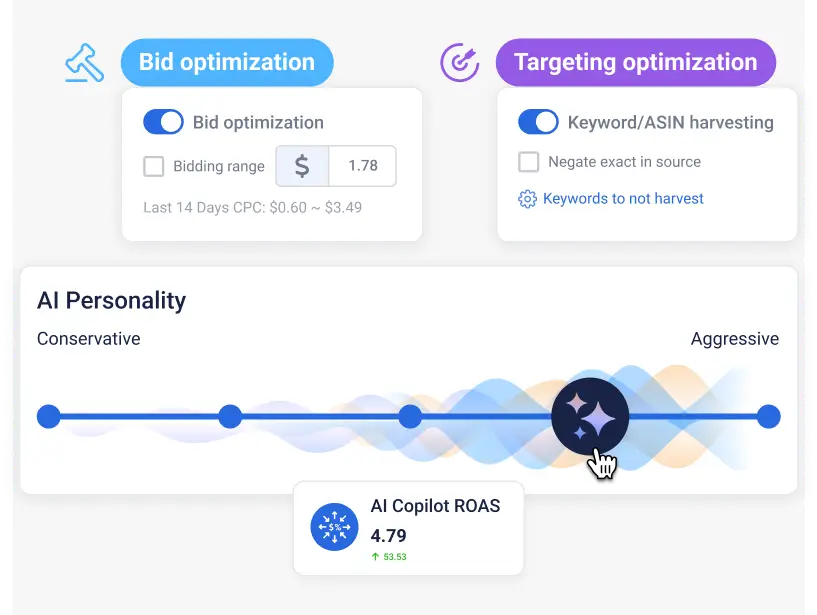
AI-managed campaigns spent 18% more than manual campaigns during PBDD but generated 22% higher GMV growth. That positive efficiency delta came from optimization speed and testing aggressiveness that manual management can't replicate.
Performance comparison:
AI adjusted bids throughout the hour based on real-time Amazon Advertising data. When campaigns hit target ACOS but ran out of budget, AI automatically added budget to maximize performance. When significant performance differences emerged between campaigns, AI shifted budgets dynamically without waiting for manual review.
The testing approach differs fundamentally from rule-based automation. AI runs micro-tests with shorter iteration periods. It might increase a bid 25% when detecting a conversion spike, measure results within the hour, then adjust again based on actual performance. Rule-based automations can handle scheduled adjustments and basic thresholds, but they can't react to unexpected patterns or pivot quickly when conditions change.
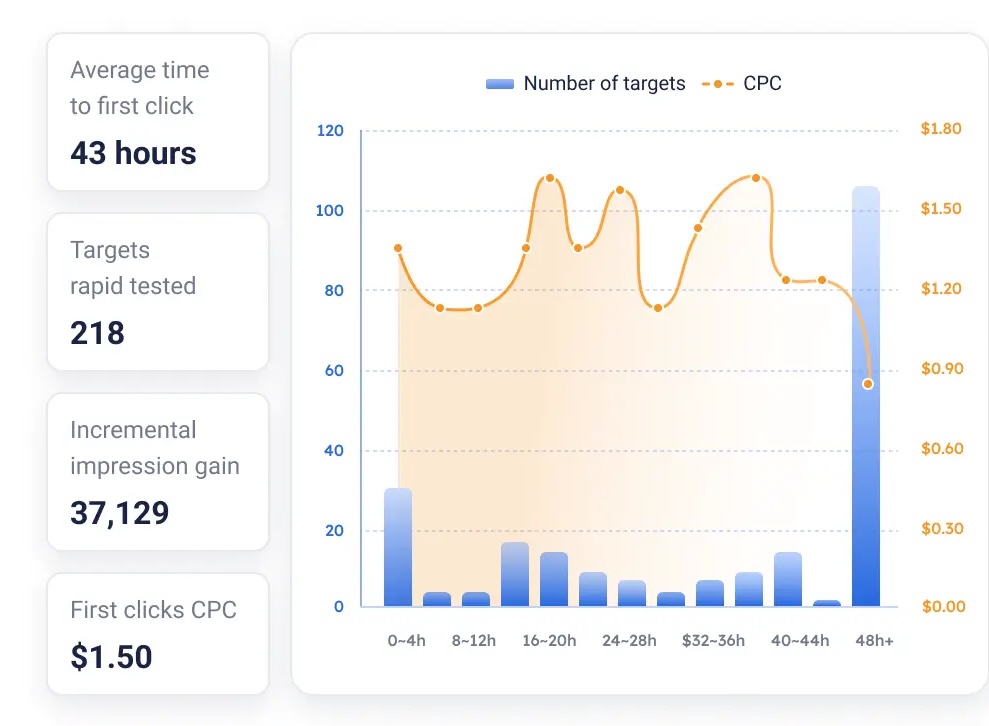
AI also optimized budget allocation through dayparting, shifting spend to high-CVR windows throughout the day. It added negative keywords continuously to block irrelevant traffic and maintain cost-effective media spend.
During PBDD, this meant capturing search spikes that happened overnight, responding to competitor stockouts within hours, and identifying audience segments showing elevated intent on Day 2 that weren't converting Day 1. These micro-opportunities compounded into measurable performance differences over the two-day event.
Use AI to save time for what matters most. Discover how Rivrhub used Xnurta’s AI optimization to cut manual work and refocus on high-impact strategy.
Prime Big Deal Days floods the platform with discount-seeking shoppers. The challenge is ensuring your ads reach shoppers who will convert for your specific product and price point. If you're the lowest-priced option, you need to capture that traffic aggressively. If you're competing against lower-ASP alternatives with lower-funnel campaigns, imprecise targeting means wasting budget on bargain hunters who won't convert at your price.
The +13% CVR improvement during PBDD came from tightening targeting to high-intent audiences during the event. Post-event AMC analysis revealed exactly which audience segments, keywords, and products drove conversions under competitive pressure. Retargeting pools, proven new-to-brand sources, and high-intent behavioral segments consistently outperformed broad discovery tactics.
But precision targeting alone isn't enough during competitive events. Real-time competitive awareness matters too. The discount and ASP landscape shifts throughout the event as competitors launch deals, adjust pricing, or run out of inventory. Knowing where you have price advantage versus where you're competing against lower-cost options determines how aggressively to bid and which audience segments to prioritize.
For BFCM: Combine AMC-powered audience intelligence with competitive monitoring throughout the event. Build high-intent audiences based on PBDD behaviors before Black Friday, then monitor competitor pricing in real-time to adjust targeting and budget allocation as the competitive landscape shifts.
Average order value faced pressure during PBDD across the market. The brands that maintained or grew basket sizes knew in advance which products customers were purchasing together.
This is where Cross-Product Association data from AMC becomes critical. The insight you need is understanding which ASINs customers bought in the same transaction during PBDD. In Xnurta's AMC Hub, you'd navigate to the Cross-Product Association model and filter for October 7-8, but regardless of your tool, you're identifying co-purchase patterns to inform which products to feature together in your BFCM creative and targeting.
Pull this data now. Your hero products for cross-selling shouldn't be assumptions, they should be proven purchase behaviors from October that you can replicate in November.
The 22% GMV advantage AI-managed campaigns showed came down to optimization speed and adaptability. AI adjusted bids every 30-60 minutes, shifted budgets between campaigns showing performance differences, and automatically boosted budgets on campaigns hitting target ACOS.
Rule-based automations can handle some optimizations around the clock: budget pacing, scheduled bid adjustments, basic thresholds. But they can't react to unexpected spikes or pivot when conditions change. High-converting search terms spiking at 11pm. Competitor stockouts creating opportunities at 6am. Audience segments showing elevated intent on Day 2 that weren't converting Day 1.
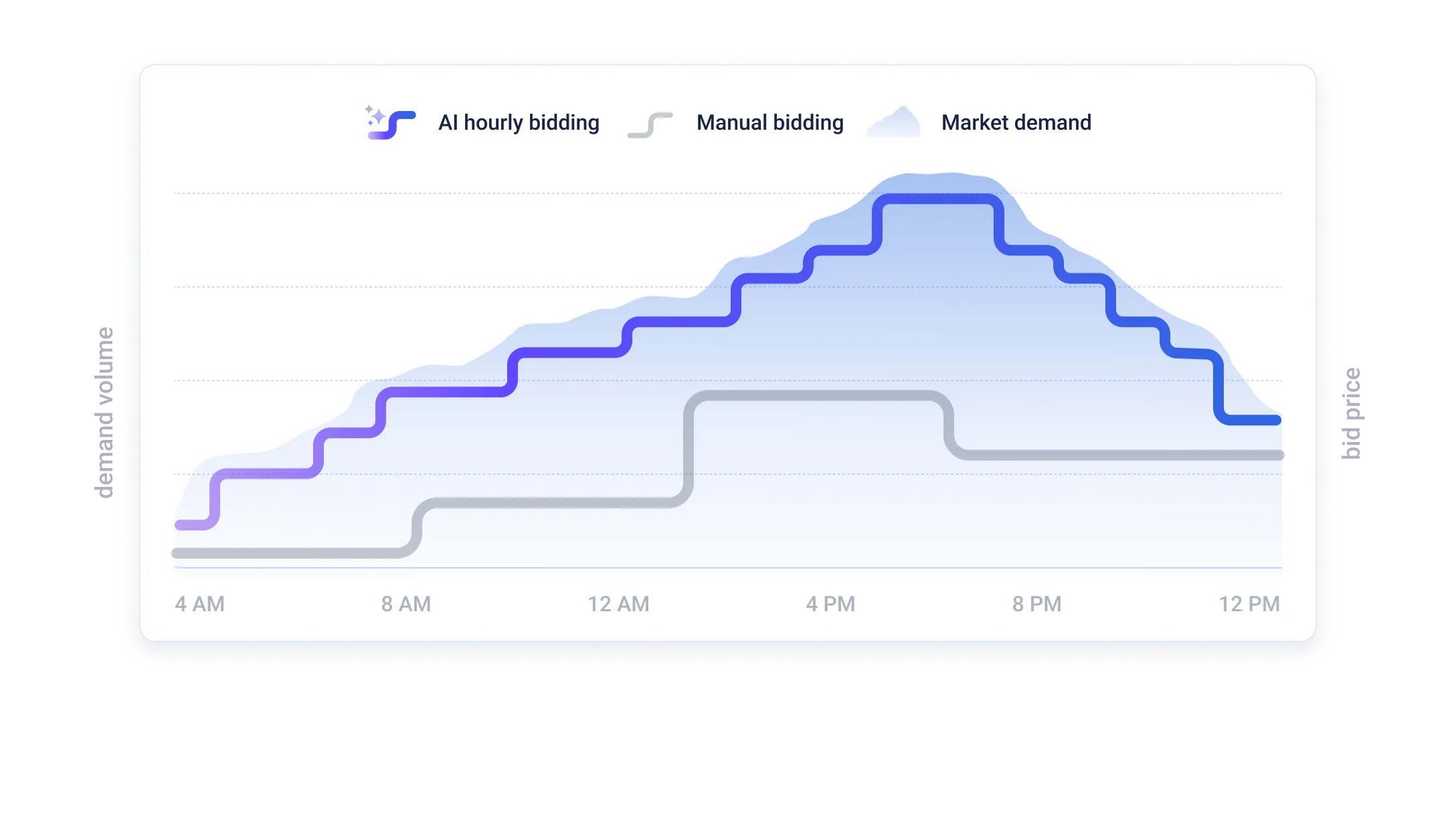
AI tests more aggressively and reverses faster when tests don't work. This speed of testing and iteration captured incremental opportunities throughout PBDD that compounded into measurable differences.
For BFCM: Whether using AI or rule-based automation, understand that event performance is highly dynamic. AI's advantage is pattern detection and real-time strategy adjustment, not just executing pre-defined rules.
Looking for more proven tentpole strategies? Discover how Channeled leveraged Xnurta to drive $2M in Sales during Prime Day 2025 through strategic campaign management.
Pull Cross-Product Association data filtered for PBDD dates (October 7-8). Look for ASINs with high co-purchase rates, products customers bought together in the same transaction. In Xnurta's AMC Hub, navigate to the Cross-Product Association model and apply date filters. Regardless of your tool, you're looking for cross-product purchase patterns in your AMC data.
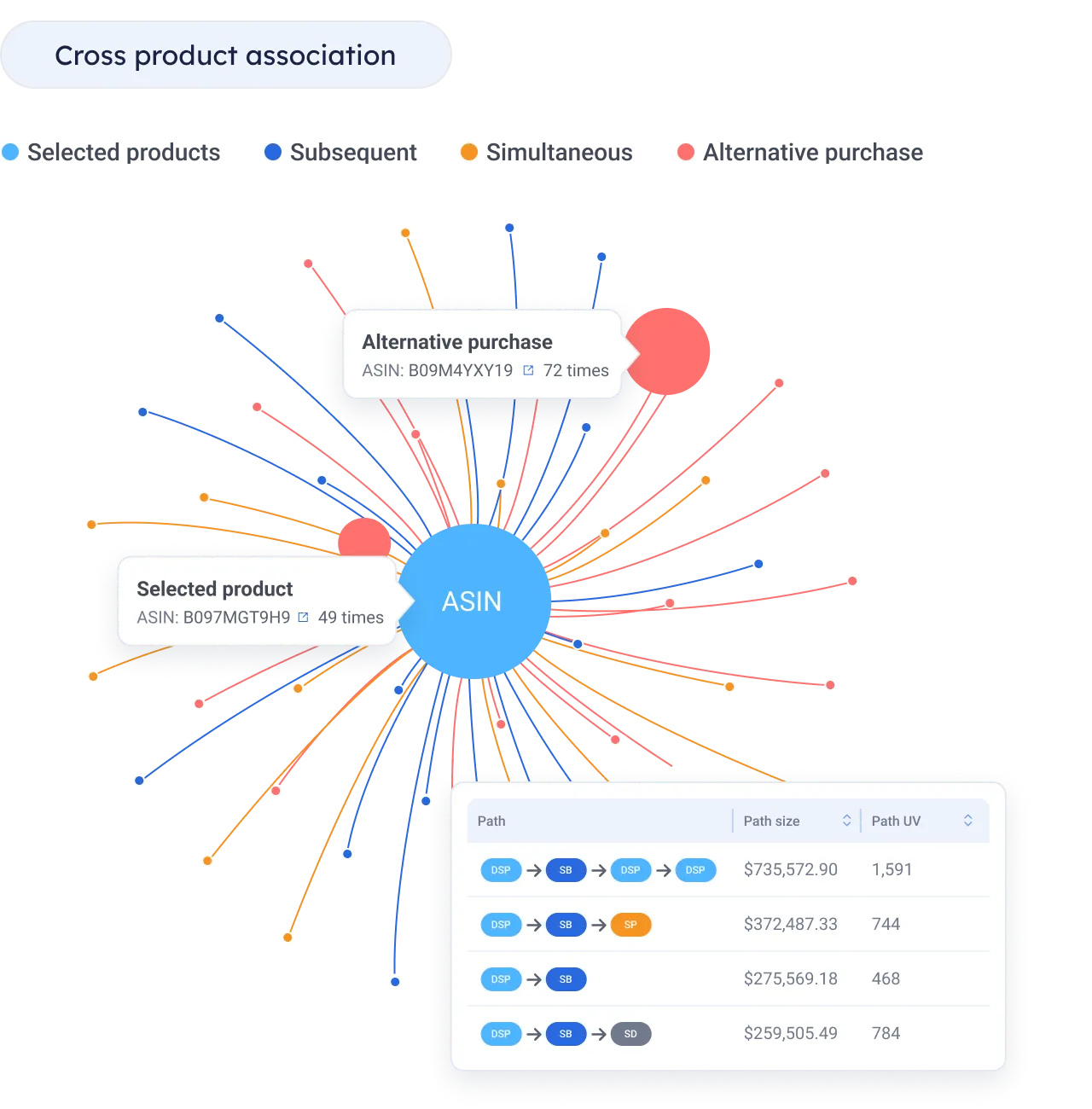
Build your BFCM strategy around top product pairs. Feature these combinations in Sponsored Display creative, set up campaigns targeting customers who bought Product A with messaging about Product B, and update Amazon Posts and A+ content to highlight proven pairings.
Identify which keywords and campaigns drove the lowest customer acquisition cost for new-to-brand customers during PBDD while maintaining meaningful volume. In Xnurta's AMC Hub, use the New-to-Brand Analysis model filtered for PBDD dates and sort by NTB customer acquisition cost. The key is balancing efficiency with scale. A keyword with the lowest CAC that only drove two sales isn't a priority. Look for keywords in the top quartile for both NTB efficiency and total sales or traffic volume.
These become your BFCM budget priorities. Create dedicated campaigns for top performers with 25-30% higher bids than standard keywords.
Create custom audiences based on specific PBDD behaviors:
In Xnurta's AMC Hub, build these through custom audience creation with conversion event filters. Regardless of your tool, segment PBDD shoppers by behavior and purchase status to create warm retargeting pools for BFCM.
PBDD revealed that execution quality matters more than budget size during competitive events. Speed, precision, and preparation determine market share capture. BFCM is your opportunity to apply these lessons.
The difference between strong PBDD performance and average results came down to three factors: AI-powered optimization that adjusted strategies every 30-60 minutes, AMC intelligence that identified high-value audiences and products, and strategic preparation that defined priorities before competitive pressure hit. These same principles apply to BFCM, where the stakes are higher and the windows for optimization are shorter.
Optimizing Amazon advertising performance during peak events requires speed, precision, and the right tools. Xnurta's AI-powered platform handles real-time bid adjustments, budget allocation, and continuous testing across Sponsored Ads and DSP campaigns. Our AMC Hub provides no-code access to advanced analytics like Cross-Product Association, New-to-Brand Analysis, and custom audience creation, turning complex data into actionable strategies. AI optimization, AMC intelligence, and expert support help advertisers maximize performance during tentpole events and beyond. Ready to see how it works? Explore our award-winning solutions or book a demo to speak with our team.
No fluff. Just what's working.