Not all retail media investment is equally exposed to AI disruption. Kiri Masters ranks on-site, off-site, and in-store media by vulnerability, and explains which strategies remain defensible.
Key takeaways
AI disruption isn't hitting every part of your retail media strategy equally. Here's where to hold ground, where to adapt, and where you're actually safe.
One of the most useful things a good analyst does is resist the urge to say 'everything is changing.' Sometimes it is. But more often, the disruption is uneven, concentrated in specific areas, leaving others relatively intact.
Kiri Masters did exactly this in her Signal to Scale 2026 keynote. Rather than issuing a blanket warning about AI's impact on retail media, she mapped the threat zone by zone across the three primary environments where retail media operates: on-site, off-site, and in-store.
The picture that emerges is nuanced, actionable, and considerably more useful than a generic 'AI is disrupting everything' headline.
On-site retail media (sponsored search results, product listing ads, homepage takeovers, browse placements) is the most vulnerable segment. The reason is structural.
As Kiri explains, AI-enabled shopping intercepts the consumer discovery process before shoppers reach a retailer's platform. By the time they arrive, they've already searched, already compared, already decided. The behaviors that on-site retail media was built to monetize, the search query, the browse session, the discovery moment, are increasingly happening somewhere else.
Sponsored search in particular faces a direct challenge: if shoppers are conducting their 'search' via AI assistant rather than in a retailer's search bar, the sponsored placements that populate that search bar have a shrinking audience of high-intent buyers to reach. The placements still exist. The shoppers increasingly don't.
Off-site retail media (DSP campaigns, programmatic placements, video and display driven by first-party retailer data) faces a different and arguably more complex threat.
The competitive advantage of retailer off-site media has always been the scarcity and quality of first-party purchase intent data. Retailers know what their customers searched for, viewed, and bought. That signal is hard to replicate.
AI platforms, however, are building their own deep datasets on consumer intent; gathered from the questions users ask, the comparisons they request, the decisions they make. Over time, this creates a competitive intelligence asset that could challenge the scarcity advantage retailers have relied on. It won't happen overnight. But the direction of travel is clear.
Here's where the picture brightens considerably. In-store retail media (digital displays, endcaps, sampling, experiential placements) is the most defensible segment in an AI-enabled shopping environment.
The reason is simple: AI cannot intercept physical presence. It cannot recreate the sensory context of a store aisle. It cannot replicate the spontaneous decision made when a shopper picks up a product, reads the packaging, and chooses to put it in their cart. The in-store moment remains uniquely immune to the AI-enabled discovery disruption reshaping online retail media.
For brands with meaningful in-store retail media investment, this is a genuine structural advantage worth recognizing and protecting.
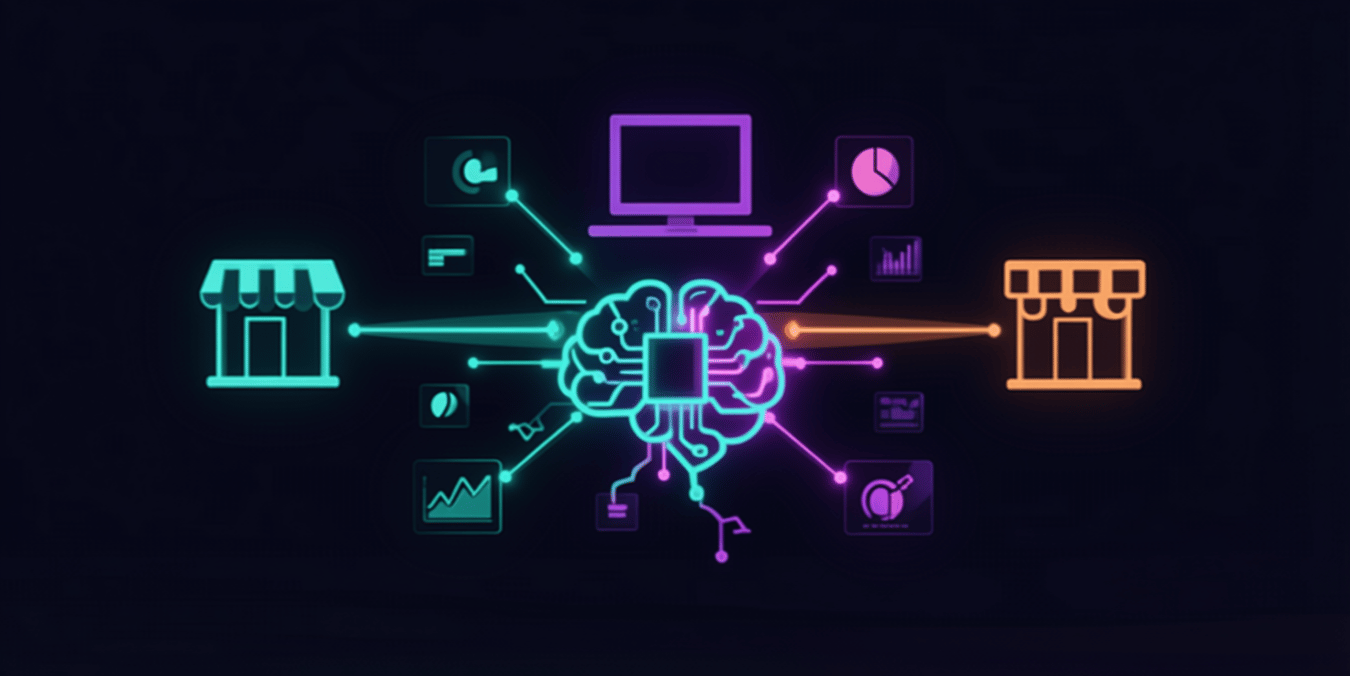
Kiri's framework doesn't call for abandoning on-site investment or catastrophizing about off-site. It calls for treating retail media as a connected system rather than a collection of independent channels, and building the flexibility to move budget toward wherever the consumer journey actually is.
That requires full-funnel visibility: the ability to see which touchpoints across on-site, off-site, and in-store are actually driving purchase decisions, so budget allocation follows real consumer behavior rather than legacy channel assumptions.
Amazon Marketing Cloud is the tool that makes that visibility possible. And Xnurta is the platform built to act on it, continuously, across Amazon, Walmart, and Criteo, in real time.
No fluff. Just what's working.